
Labuan Bajo Tourism Activities Post-Earthquake: Tourist Visits Remain Relatively Stable

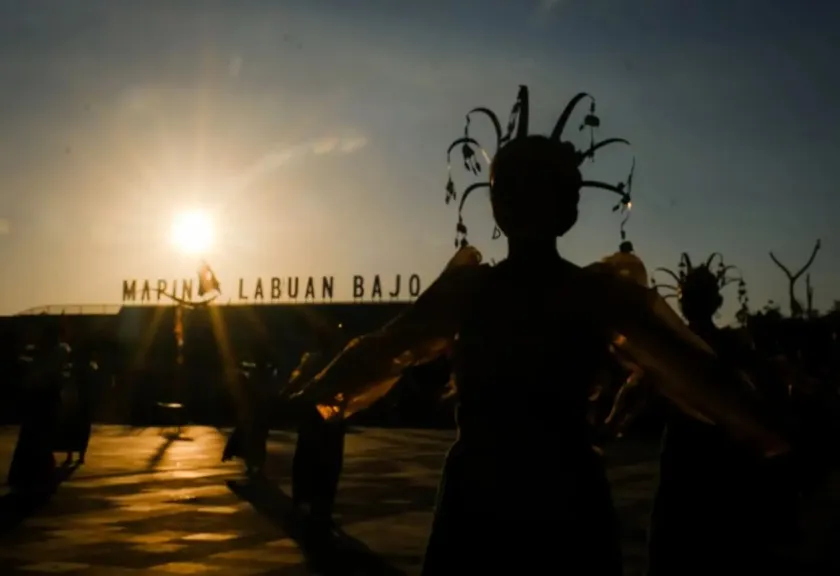
Tourism activities in Labuan Bajo, East Nusa Tenggara remain operational following the 7.7 magnitude earthquake that struck Flores. Visitor arrival volumes are relatively stable, marking a positive signal for tourism sector recovery efforts in the region.
Minister of Tourism Widiyanti Putri Wardhana held a meeting with the West Manggarai Regency Government, along with tourism industry players and associations in Labuan Bajo, to assess post-earthquake tourism conditions and formulate recovery measures.
The meeting was attended by regional government representatives, the Indonesian Hotels and Restaurants Association (PHRI), the Association of Indonesian Tours and Travel Agencies (ASITA), marine tourism operator associations, tour guides, business groups, and other relevant stakeholders.
READ ALSO
Labuan Bajo's Challenge: Preserving Komodo Habitat Amid Tourist Surge
Robert De Niro is the reason Michelle Monaghan returned to Indonesia to see Komodo dragons.
The Ministry of Tourism regrets the shooting incident near the Baliem Valley Cultural Festival.
According to the West Manggarai Regent's report as of 28 August 2026, tourist cruise operations in Labuan Bajo continue to run normally. Since 15 August 2026, a total of 2,854 vessel departures and 32,692 tourist movements have been recorded.
Both domestic and international flight traffic to Labuan Bajo is also relatively stable.
Komodo National Park and Padar Island Reopened
Several major tourist destinations that were temporarily closed for safety assessment purposes have resumed operations.
Komodo National Park and Padar Island have been reopened. All land-based tourist attractions within the Labuan Bajo area also remain operational.
Widiyanti stated that accurate public communication regarding actual on-ground conditions is critical, to ensure tourists receive clear information prior to travelling.
"Tourist and public safety remains our top priority. For this reason, all information must use unified verified data, be updated promptly, and communicated consistently. This will allow tourists to make informed decisions based on real conditions in the field," stated the Tourism Minister.
BPOLBF Monitors Tourism Destinations and Industry
The Ministry of Tourism, through the Labuan Bajo Flores Authority Implementing Agency (BPOLBF), continues to coordinate with regional governments and related ministries and institutions.
Monitoring is being conducted across all components of the tourism ecosystem, including tourist attractions, hotels and accommodation, restaurants, supporting facilities, and transport accessibility.
BPOLBF is also supporting tourist information dissemination, providing operational assistance, and facilitating aid distribution in affected areas.
These recovery measures are designed not only to restore destination operations, but also to safeguard the livelihoods of business operators and communities who rely on the tourism sector for income.
Recovery Goes Beyond Physical Infrastructure
For the Ministry of Tourism, successful recovery cannot be measured solely by the restoration of tourist facilities and destinations.
Recovery efforts must reach every part of the tourism value chain, including tour vessels, guides, hotels, restaurants, tourist villages, and micro, small and medium enterprises (MSMEs).
Widiyanti explained that recovery roadmaps will be structured based on damage levels, operational readiness of destinations and business operators, and the degree of local community dependency on tourism activities.
"The Ministry of Tourism is present in Labuan Bajo focused on the recovery and long-term sustainability of the tourism sector. Today I have met directly with regional authorities, industry players, associations, and all tourism stakeholders. Most importantly, I am here to listen first-hand to their on-ground conditions, challenges, and needs following this disaster," the Minister stated.
The government has established four core priorities for the Flores tourism recovery process.
First: guarantee public safety and implement consistent, data-driven public communications. Second: restore tourist destinations, the tourism industry, and local community livelihoods.
Third: rebuild market confidence while carrying out gradual tourism reactivation. Fourth: strengthen destination resilience against future disaster risks.
This phased approach ensures recovery is not rushed, while still providing clear certainty for industry operators and tourists.
Disaster Mitigation Strengthening As Recovery Momentum
The earthquake has served as a reminder that tourist destinations located in disaster-prone zones require robust mitigation systems.
For this reason, the government is using this recovery period as an opportunity to upgrade disaster preparedness standards, rather than only restoring conditions to pre-disaster levels.
"Recovery does not end with repairing physical damage. We must use this moment to strengthen disaster risk management, emergency response standard operating procedures, evacuation routes and assembly points, communication systems, and ensure every tourism stakeholder is prepared for emergency situations," she concluded.









Belum ada komentar. Jadilah yang pertama!