
Soekarno-Hatta Airport and Several Airports Affected by Volcanic Ash Have Resumed Operations

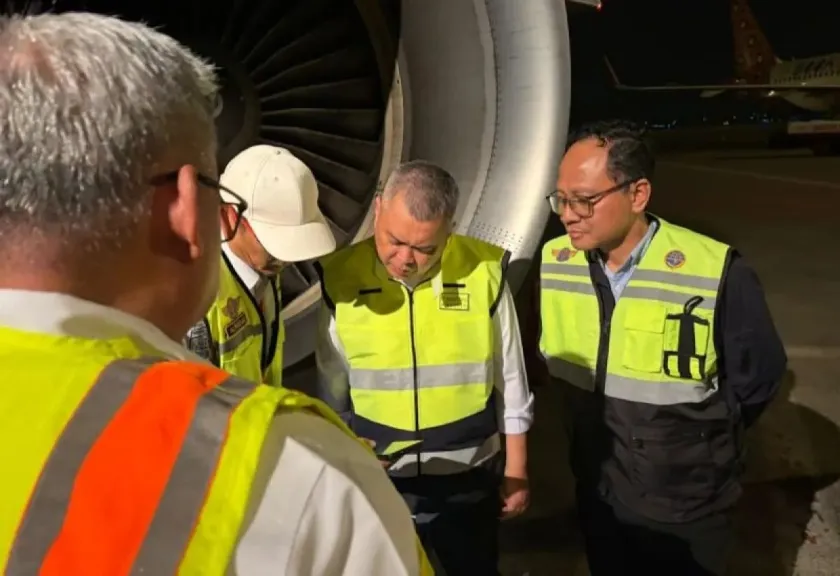
Flight operations at multiple airports have returned to normal after being disrupted by volcanic ash dispersion from Mount Anak Krakatau. As of early Tuesday, 8 September, airports across Jakarta, Banten, and West Java were declared safe to resume flight services.
Minister of Transportation Dudy Purwagandhi confirmed this decision was taken following a formal evaluation of national aviation safety parameters.
"Operational closure for Soekarno-Hatta Airport and other affected airports impacted by Mount Anak Krakatau volcanic ash has concluded. Effective 00:01 WIB on Tuesday (8/9), all airport operations have resumed normal function," stated the Minister of Transportation in Jakarta.
READ ALSO
Proud! Soekarno-Hatta Airport Upgraded in 2026 World Ranking
The Ministry of Tourism emphasizes the importance of security to maintain tourist trust.
Garuda Indonesia Provides 170,845 Free Domestic Flight Seats for Foreign Tourists.
The reopening was marked by activation of Terminal 1 at Soekarno-Hatta Airport during the early Tuesday hours. From 00:01 WIB, Soekarno-Hatta Airport (Banten), Halim Perdanakusuma Airport (Jakarta), and Husein Sastranegara Airport (Bandung) were officially reactivated for service.
Shortly afterwards, two additional airports were cleared for reopening.
"Following this, Budiarto Curug Airport and Pondok Cabe Airport, both located in Banten, were also reopened at 02:25 WIB," the Minister added.
Five Airports Resume Flight Operations
The restoration of airport operations brings positive news for waiting passengers, tourists, and business travellers who were affected by the volcanic ash flight disruptions.
Operations are being restored with continuous monitoring of airspace conditions. Radin Inten II Airport and Muhammad Taufiq Kiemas Airport in Lampung remain suspended pending further condition updates before reopening.
Meanwhile, Atung Bungsu Airport in Pagar Alam, South Sumatra, had already resumed full normal operations at 09:00 WIB on Monday, 7 September.
Airports are being reopened in phased stages, aligned with real-time volcanic ash developments and aviation safety assessment results.
Safety Remains The Primary Priority
For travellers planning to use these airports, the return to normal operations does not mean all flight activity is proceeding without precautions.
The government is maintaining a set of mandatory regulations to guarantee safe air travel. This includes a requirement for airport authorities and airlines to conduct full inspections of every aircraft fleet before operation.
Alongside aircraft checks, all pilots and cabin crew are also required to be fully trained and notified regarding airspace zones classified within restricted polygons.
This means travellers with confirmed travel plans must still verify the latest official updates from their airline and airport management before departing for the airport.
Flight schedules may be adjusted at any time in response to airspace condition changes and rulings from aviation safety authorities.
Volcanic Ash Previously Disrupted Eight Airports
Disruptions to airspace and airport operations from Mount Anak Krakatau volcanic ash first began on Saturday, 5 September.
At the peak of the incident, eight airports were fully closed. These were: Soekarno-Hatta (Banten), Halim Perdanakusuma (Jakarta), Radin Inten II (Lampung), Husein Sastranegara (Bandung), Budiarto Curug and Pondok Cabe (Banten), Taufiq Kiemas Airport (West Lampung Coast), and Atung Bungsu Airport (Pagar Alam, South Sumatra).
Conditions gradually improved following the incident. Atung Bungsu was one of the first airports to fully resume normal flights, followed by the sequential reopening of other airports during the early hours of Tuesday.
The Minister of Transportation has instructed airlines not to focus solely on restoring flight schedules, but to continue prioritising safety for every individual flight.
Ongoing coordination between airport operators, aviation authorities, and all related government agencies remains required to maintain safe flight operations.
For travellers, this development signals the recovery of national air connectivity after the volcanic ash disruption. However, vigilance remains critical for travel, as conditions at Mount Anak Krakatau and ash dispersion patterns are still under active monitoring.










Belum ada komentar. Jadilah yang pertama!