
KAI Heritage Week 2026 invites tourists to trace the early historical footprints of Indonesia's railways.
Saturday, 26 September 2026 | 15:00
Author: Arif S

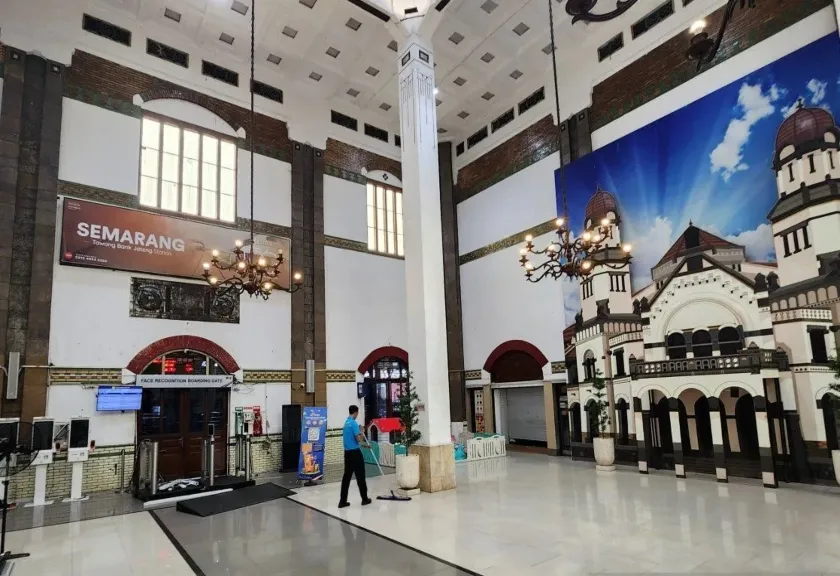
KAI Heritage Week 2026 revives the earliest historical traces of Kereta Api Indonesia. PT Kereta Api Indonesia (Persero) invites participants to explore Historical Heritage Zones in Central Java via a Special Excursion Train (KLB) Joy Ride, travelling the Semarang Tawang Station – Tanggung Station – Kedungjati Station route.
The journey held on Friday 25 September is far more than just a regular train ride. This route brings participants back to connect with critical milestones in Indonesia's rail transport history, with the Semarang-Tanggung line specifically standing as one of the founding foundations of the nation's railway development.
"KAI Heritage Week 2026 carries the theme of Indonesian historical journey, heritage, culture, and national identity. Through this trip, we revisit how railway systems have traversed a long path, from their very first construction up to evolving into the public transport mode that serves the people of Indonesia today," stated KAI President Director Bobby Rasyidin.
READ ALSO
Exploring Lawang Sewu, a Heritage and Railway History Tourism Destination in Semarang
Enjoying Sumatra Through the Train Window, 21,911 Foreign Tourists Traveled on KAI Trains
Palestine Protects Archaeological Sites From Threats, Tourism Made Part of the Strategy
The expedition departs from Semarang Tawang Station, one of the most historic stations for railway network development in Central Java. From Semarang, the special excursion train proceeds to Tanggung Station, a key landmark in the earliest records of Indonesian railway history.
This story began on 17 June 1864, when construction first commenced on the approximately 25 kilometre Semarang–Tanggung line, marked by the groundbreaking ceremony held in Kemijen, Semarang. This construction project was carried out by the Nederlandsch-Indische Spoorweg Maatschappij (NIS) company.
Three years later, exactly on 10 August 1867, the Semarang-Tanggung line was officially opened for operation. The launch of this line became the very first milestone for Indonesian Railways, and opened an entirely new chapter for rail-based transport to support human mobility and goods distribution across the archipelago.
Tanggung Station remains one of the surviving witnesses of this foundational era, documenting the period when rail networks first began expanding to connect different regions while driving economic activity across Central Java.
From Tanggung, the journey continues onwards to Kedungjati Station. This station holds a vital position in the development of Central Java's railway network, as it served as a strategic junction point for Travel to multiple other regions.
Kedungjati was developed as part of the NIS network, with connecting lines Running to Surakarta and Ambarawa.
One notable historic event occurred on 21 May 1873, when the Kedungjati–Ambarawa line was officially opened. This rail extension further expanded the national rail network and strengthened inter-region connectivity across Central Java.
Bobby noted that the leg of the journey between Tanggung and Kedungjati clearly illustrates how Indonesia's railway network has continuously evolved through the years.
"Tanggung Station stands as a reminder of where Indonesian railways first began, back in 1867. Meanwhile Kedungjati demonstrates how this rail network kept expanding, linking more and more regions across the country. Looking back at this historical journey, we can clearly see that railways have held a critical role throughout the story of the Indonesian nation," Bobby stated.
The heritage experience at KAI Heritage Week 2026 does not end with the train ride itself. A full lineup of activities was held at both Tanggung and Kedungjati Stations, including Corporate Social Responsibility (CSR) handover ceremonies, commemorative plaque inaugurations, fashion shows, and theatrical performances portraying the history of Indonesian railways.
Through this series of events, these historic station sites are no longer functioning only as operational railway infrastructure: they are transformed into public spaces to reconnect people with the stories of the past. For visitors, this experience creates an opportunity to enjoy history-focused Tourism while gaining understanding of the development of rail transport in Indonesia.
"159 years ago, the history of Indonesian railways began right here on this Semarang–Tanggung line. Today we see how this journey has continued to grow, and remains an essential service for the public. KAI will continue preserving this historical legacy, while also continuously improving railway services for all people," Bobby concluded.
Ultimately, KAI Heritage Week 2026 offers a new perspective to understand the journey of Indonesian railways. From that very first Semarang-Tanggung track up to the ever-expanding national rail network today, this event demonstrates that trains are far more than just transport: they are an integral part of the history, culture, and collective journey of the Indonesian people.









Belum ada komentar. Jadilah yang pertama!