
Tips for Choosing the Right Flight Time When Traveling with Children to Ensure a More Comfortable Trip and Minimize Jet Lag
Wednesday, 12 August 2026 | 16:00
Author: Arif S

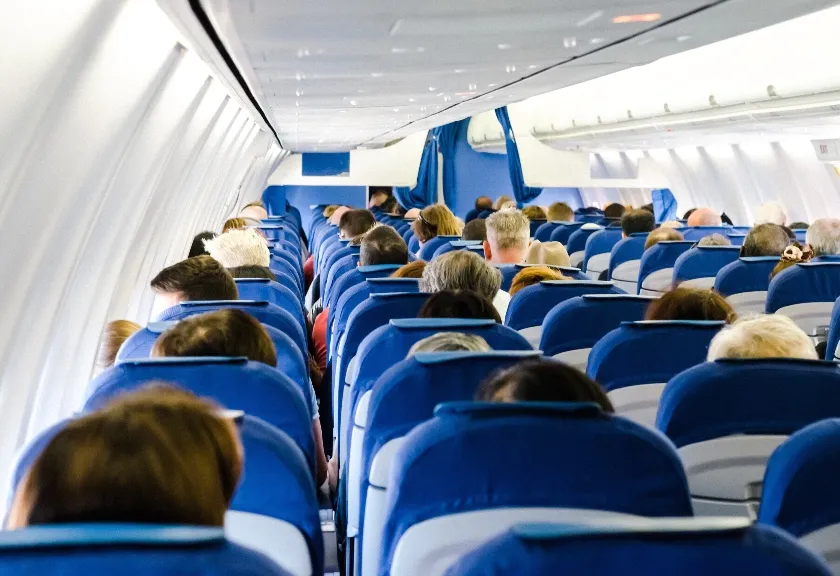
Planning Air Travel with children is not just about selecting an Airline or packing luggage. Flight departure timing also directly impacts a child's comfort during the trip, especially for long-haul journeys crossing multiple time zones.
Every age group has distinct sleep patterns and biological rhythms. This means a flight schedule that works comfortably for infants will not necessarily be the best choice for school-age children or teenagers.
As quoted from Condé Nast Traveler, Julissa Baez, pediatrician and clinical professor at New York University, confirmed that many parents still operate under the assumption that babies and young children do not experience jet lag.
READ ALSO
Travel Tips: Avoid taking the last flight so that your journey goes more smoothly.
Small Bedtime Habits, Traveler Hotel Safety Tips
Who's the Ideal Holiday Partner? This Research Answer Surprises Many People
"The most widespread misconception is that infants and young children do not get jet lag," stated Baez.
Omar El-Gohary, Chief Executive and Superintendent Pharmacist at IQ Doctor, added that ideal flight timing is dependent on the child's age. He clarified that the common belief overnight flights are always the optimal choice does not hold true for all age groups.
Flight direction also affects the body's adaptation process. Eastbound flights are generally far more taxing than westbound travel, as the body is required to adjust to an accelerated time shift.
Babies 0-2 Years: Select Morning Flights
For infants aged 0 to 2 years, flights scheduled between 06.00 and 09.00 are found to align best with their natural sleep cycles.
This timing preserves the baby's established nighttime sleep routine, and avoids forcing them to sleep at an unnatural time mid-journey.
By contrast, overnight flights can become extremely difficult if the baby is unable to fall asleep on board.
"When a baby refuses to sleep on a night flight, parents can be left dealing with over 10 hours of overstimulation, crying and exhaustion inside a confined aircraft space," he explained.
Baez advises parents against arriving at the airport excessively early, to avoid keeping the infant in loud crowded environments for prolonged periods.
During takeoff and landing, feeding the baby will help relieve uncomfortable pressure buildup in their ears.
Bringing one small new toy is a simple effective method to distract and occupy the baby throughout the flight.
After arrival, parents should not immediately force the baby to adapt fully to the new time zone sleep schedule.
Children 2-4 Years: Allow Time For Physical Movement
For toddlers aged 2 to 4 years, flights departing late morning through to early afternoon are the most suitable.
Children in this age group require regular opportunities to move and play. Allowing them to run and be active inside the airport before boarding will help the child remain calmer for the duration of the flight.
Sleep routine disruption requires special attention, as this directly impacts the child's mood and behaviour.
"Breaking a child's regular sleep pattern can trigger full day emotional instability," he noted.
Parents should bring familiar comfort items including the child's blanket, pyjamas or favourite toys. Additionally avoid high sugar food and drinks before departure, as these will make it significantly harder for the child to settle down.
Prepare offline downloaded copies of their favourite shows for in-flight entertainment, and offer small portions of snacks gradually throughout the journey.
Once at the destination, exposure to natural daylight during daytime hours will assist the child's body to begin adapting to the new time zone.
School-Age Children Are Best Suited To Overnight Flights
For children aged 5 to 12 years, flights departing between 18.00 and 22.00 are most effective, particularly for long distance travel.
At this age, the child's circadian rhythm has developed sufficiently, making them far more likely to sleep comfortably through an overnight flight.
This greatly reduces jet lag symptoms upon arrival.
"Once biological rhythms have matured, overnight flights become a very effective way to minimise jet lag on long haul journeys," explained El-Gohary.
Parents can gradually shift the child's bedtime in small increments over 2 to 3 days prior to departure.
On board, encourage the child to rest after meal service, and limit use of high brightness screen devices.
Setting watches and all electronic devices to the destination time zone at the start of the flight will also help the child mentally adjust to the new schedule.
After landing, have the child either rest or get daylight exposure appropriately according to local arrival time, to allow their circadian rhythm to adapt gradually.
Teenagers Still Require Jet Lag Preparation
Teenagers aged 13 to 18 generally adapt more easily to overnight flights, as they naturally have later sleep schedules.
That said, jet lag will still affect them. Parents should monitor for symptoms including irritability, headaches and reduced motivation.
Baez recommends teenagers avoid caffeine before flying, and maintain proper hydration both before and during travel.
If arriving during daytime hours, teenagers should not go immediately to sleep. Night time screen use should also be restricted, to reduce blue light exposure that interferes with the body's adaptation process.
Plan only light low-effort activities for the first day of the trip, to give the body sufficient time to adjust properly to the new time zone.










Belum ada komentar. Jadilah yang pertama!