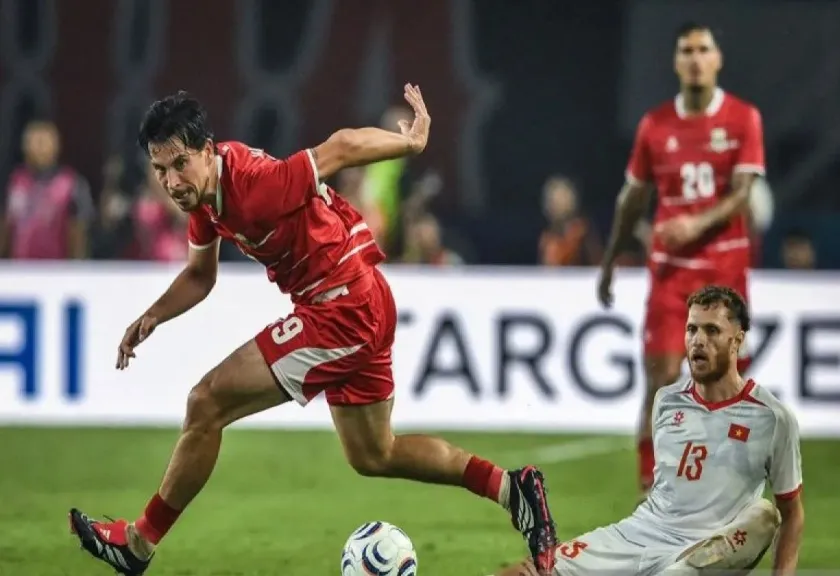

The 2026 FIFA ASEAN Cup marks John Herdman's second chance to prove his credentials as head coach of the Indonesian National Football Team. After failing to guide Garuda past the group stage of the 2026 ASEAN Hyundai Cup, the English tactician now enters this tournament with an unambiguous mandate: Indonesia must compete to win the entire title.
This competition presents a very different scenario to the prior tournament. The 2026 FIFA ASEAN Cup is scheduled within the official FIFA Matchday calendar, meaning Indonesia will have far greater eligibility to call up its full pool of top players, including those based at overseas clubs.
Herdman also carries hard lessons from that earlier failure. Indonesia missed out on knockout stage progression after being held to a 1-1 draw against Singapore, ultimately finishing third in Group A with seven points.
READ ALSO
FIFA ASEAN Cup 2026: It's Time for John Herdman to Lead the Indonesian National Football Team to Claim the Championship Title.
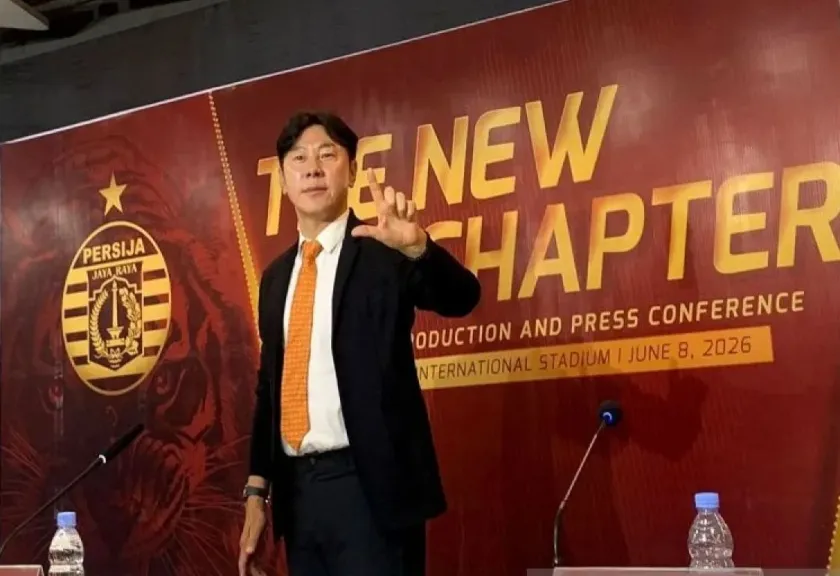
Shin Tae-yong Builds, Herdman Chooses: A New Chapter for Indonesian Football
From the setback at the ASEAN Hyundai Cup to the 2026 FIFA ASEAN Cup: This is John Herdman's real test.
Singapore will once again face Indonesia in the 2026 FIFA ASEAN Cup. This makes their upcoming fixture far more than just a routine group match: it is an opportunity for Herdman to prove he has fixed the flaws that derailed Garuda's tournament momentum last time out.
Indonesia have been drawn in Group A alongside Malaysia, Singapore and Bangladesh. By FIFA world ranking, Garuda hold the strongest official standing of all four teams in the group.
Indonesia currently sits 118th in the global FIFA rankings, ahead of Malaysia at 136th, Singapore at 148th, and Bangladesh in 181st position.
That ranking advantage is no guarantee of victory however. Indonesia and Malaysia share a long, fierce regional football rivalry, while Singapore already demonstrated they are fully capable of frustrating the Garuda squad.
This is precisely where Herdman's true challenge lies.
If Indonesia possesses superior individual player quality and can field its full strength side, the standard of on-pitch performance must also rise accordingly. It will not be enough to dominate possession or create half-chances. Garuda will need to control match tempo, convert their opportunities cleanly, and protect any leads they build.
The tournament format only amplifies these requirements. The Premier Division is split into two groups of four teams each. Every side will play three group fixtures, but only the outright group winner will advance directly to the final.
There are no semi-final rounds.
This means just one poor result could catastrophically end Indonesia's path to the final. Every single Group A match must be treated as a do-or-die decisive fixture.
At the same time, this tournament brings tangible benefits for Indonesia. As an official FIFA calendar event, all results will count towards world ranking points. The more wins Indonesia secures, the greater the chance for Garuda to climb up the global rankings.
Yet ranking progress cannot be the primary target for this campaign.
Lifting the trophy must be the end goal.
Indonesia already gained valuable high-level competitive experience competing in the Fourth Round of the 2026 FIFA World Cup Qualifiers. If Garuda can hold their own at that standard of international football, this regional ASEAN tournament - with a full strength squad available - should no longer be treated as merely a developmental learning exercise.
This exact subject was the focus of discussion on the ITSMe Podcast, recorded at Sentul Studio in Bogor. The episode featured football analysts Ronny Pangemanan and Sapto Haryo Rajasa, hosted by Gilang Respaty and Pudila.
Discussions covered not just the strengths of Indonesia's upcoming opponents, but also the mounting pressure on Herdman to build an Indonesian National Team that performs far more effectively than their disappointing previous tournament outing.
Regardless of which players ultimately receive the international call up, the core challenge remains unchanged: how Herdman will combine individual talent into a cohesive, functioning and effective team unit.
The 2026 FIFA ASEAN Cup is no longer a platform for Herdman to run tactical experiments. This is his opportunity to demonstrate that the prior tournament failure resulted in real, actionable improvements.
The FIFA ranking gives them a baseline advantage. Host nation status gives them extra support. The quality of their top players gives them hope.
At the end of the day though, none of these advantages will count for anything unless they are translated into wins on the pitch.
This is no longer the time for learning. John Herdman must deliver the championship for the Indonesian National Team.