
South Korea Has Another Side for Travelers: Exploring Mountains, Forests, and Traditional Villages

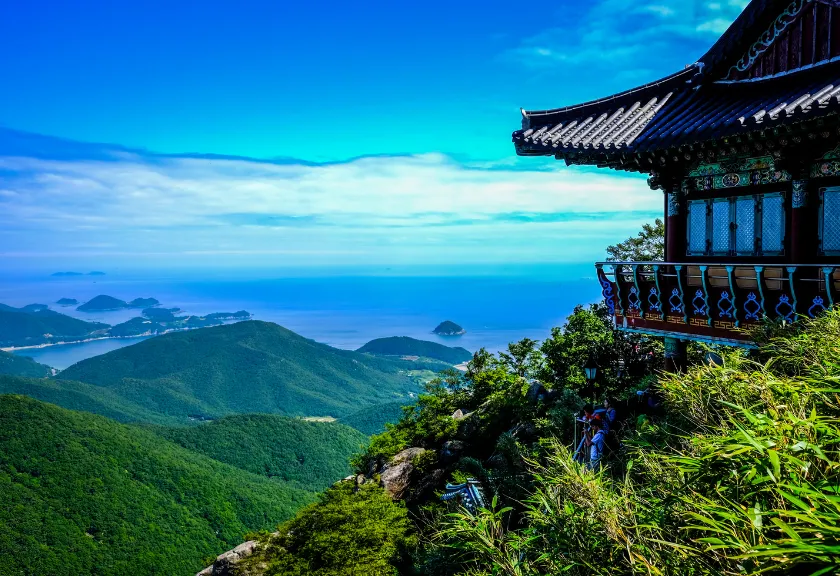
For a long time, South Korea has been synonymous with the glitz of Seoul, local cuisine, K-Pop, Korean dramas, and shopping destinations. However, this country actually holds landscapes that offer entirely different experiences: mountains, forests, hiking trails, and traditional villages spread across the country from north to south.
This potential is now being seriously developed for international tourists. South Korea is testing a new way to introduce the Land of Ginseng as an international trekking destination through the K-Trekking Challenge program.
11 hikers from France became the first group to try out this program. They are members of the Federation Francaise de la Randonnee Pedestre (FFRP), the largest hiking federation in France.
The group undertook an 11-day journey to explore the diverse landscapes of South Korea. Their adventure began at Bukhansan Mountain, located just a short distance from central Seoul.
Citing The Korea Herald on Sunday, 6 September 2026, South Korean Minister of Culture Chae Hwi-young personally welcomed the group at Bukhansan National Park. They were also accompanied by Um Hong-gil, one of South Korea's most renowned mountaineers.
The visit of these French hikers is part of the very first trial run of the K-Trekking Challenge, a program developed by the Korea Tourism Organization (KTO) together with the Korea National Park Service.
Through this program, South Korea aims to bring its trekking experiences beyond the domestic market, positioning them as part of tourism products that can be enjoyed by international visitors.
Discovering a Different Side of South Korea
For travelers who have only ever known South Korea through urban tourism, trekking offers an entirely new perspective.
On the hiking trails, the journey is not only about elevation and terrain. South Korea's natural landscapes are also intertwined with history, temples, traditional villages, and cultural sites that have stood for centuries.
This is exactly what the FFRP group's trip is designed to showcase.
After completing their hike at Bukhansan, the group will continue their journey to Hahoe Village in Andong, Namsan in Gyeongju, Geumjeongsan in Busan, Suncheonman Bay in South Jeolla Province, and Jirisan Mountain.
They will also experience a templestay program at Hwaeomsa Temple in Gurye.
This itinerary demonstrates that trekking in South Korea is not designed purely as a sporting activity. Trips can be packaged as a combination of hiking, nature exploration, cultural tourism, and even immersive temple accommodation experiences.
This kind of concept appeals to modern travelers who are seeking more active trips while also gaining deep authentic local experiences.
Trekking Facilities Are Being Made Foreign-Tourist Friendly
South Korea is also working to remove one of the most common barriers international visitors face when trying outdoor activities: equipment.
Through the K-Trekking Challenge, foreign tourists can borrow hiking boots and trekking poles free of charge. Participants also receive a keychain souvenir.
While this may seem like a simple measure, it provides significant added value for travelers who want to try trekking without having to bring full gear from their home country.
This program was launched after KTO ran promotions for various South Korean trekking routes in France. This strategy received a response from FFRP, an organization founded in 1947 with approximately 240,000 registered members.
A total of 40 FFRP members are scheduled to visit South Korea in three separate groups, with each group undertaking an 11-day itinerary.
That means the 11 hikers currently in South Korea are not ordinary tourists. They are part of an effort to test how international markets will receive South Korea's trekking experiences.
South Korea's Greatest Asset: Mountains and Forests
Looking at the country's geography, South Korea's decision to develop trekking tourism actually makes perfect sense.
Around 70 percent of South Korea's total land area consists of mountains and rolling hills. This geographic condition means there is enormous space to develop hiking activities across all regions of the country.
Additionally, forest areas cover approximately 63 percent of the country, according to data from the Korea Forest Service.
This proportion forms a critical foundation for building nature-based tourism experiences. Travelers do not need to travel to remote isolated areas to find hiking trails, as many natural destinations are easily accessible from urban centres.
Bukhansan is one of the most striking examples. Located within the Seoul metropolitan area, this mountain offers a very unique combination: travellers can experience South Korea's vibrant metropolitan atmosphere and go mountain hiking within the same trip.
This blend of nature and urban proximity is what can make South Korean trekking stand out from conventional hiking destinations.
"Korea has four distinct seasons, beautiful and varied mountains across the entire country, plus deep history and culture that makes walking activities truly special. We hope this visit by the French federation members will become the opportunity to introduce Korean trekking to the world," stated an official from South Korea's Ministry of Culture.
Target 3 Million National Park Visits
South Korea's ambitions go far beyond this single trial program.
KTO and the Korea National Park Service have set a target of 3 million tourist visits to national parks by 2028. This target confirms that nature tourism and trekking are now being positioned as a core part of South Korea's overall tourism strategy.
For international visitors, this approach also opens up entirely new travel options. South Korea will no longer only offer itineraries focused on Seoul, Busan or Jeju Island - instead, trips will now invite travelers to go deeper into the country's natural landscapes and cultural zones.
This concept will also be of interest to Indonesian travellers who are already familiar with nature tourism. The four distinct seasons also give South Korea's hiking trails unique character: lush green landscapes in summer, vibrant autumn foliage, and snow-covered trails in winter.
At its core, the true strength of the K-Trekking Challenge is not just about mountain climbing. South Korea is ultimately offering a whole new way to experience the country: slower, more active, and far closer to the local nature and culture.
If this strategy succeeds, future trips to South Korea may no longer end at city centres, trendy cafes, or Korean drama filming locations. Instead, the next step for many travellers might just be lacing up hiking boots and following the mountain trails that wind across this country.









Belum ada komentar. Jadilah yang pertama!