
Bolosego Food Truck Case: Government is Urged to Strengthen Supervision Within Tourist Areas
Tuesday, 22 September 2026 | 14:00
Author: Arif S

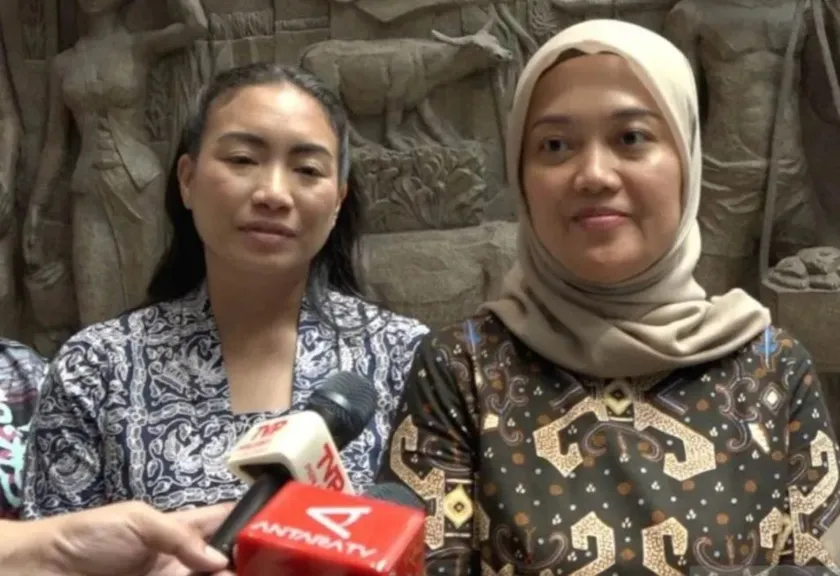
Alleged illegal extortion targeting the Bolosego food truck at the Alun-Alun Kidul (Alkid) public square in Yogyakarta has drawn widespread public attention. Deputy Chair of the Indonesian House of Representatives Commission VII Chusnunia has called on the government to step up enforcement against unauthorised levies targeting Micro, Small and Medium Enterprises (MSMEs), particularly within tourist areas.
"The Bolosego case serves as a clear lesson: even when business operators follow all formal legal procedures, there is still no guarantee they will be free from illegal extortion. This case has captured public focus precisely because it occurred in a well-known tourist destination — one can only imagine what happens in less high-profile areas that receive far less public scrutiny," Chusnunia stated in an official release from Jakarta.
According to Chusnunia, this issue extends far beyond just extra costs for a single business owner. When unauthorised levies become normalised for MSME operations, business operating costs rise, and traders are left facing constant uncertainty while running their livelihoods.
READ ALSO
MoT Targets Tourists from Macau: Indonesia's Promotion Strategy in East Asia
Air Travel Revolution: Document-Free International Travel Soon to Become Reality
Confused about how to spend your weekend in Jakarta? Here are 5 interesting activities you can attend.
"This practice of illegal extortion will inevitably undermine Indonesia's MSME ecosystem. It inflates operational costs, erodes legal certainty on the ground, and also inflicts lasting reputational damage on tourist destinations," she added.
Business Certainty is Part of the Tourist Experience
For tourist areas, the presence of local MSMEs is intrinsically tied to visitor experience. Street food stalls, cafes, food vendors, souvenir sellers and local creative businesses are often an integral, beloved part of a destination's atmosphere and identity.
When traders are able to operate under clear, consistent regulations, it becomes far easier to build healthy working relationships between area managers, vendors, tourists and local authorities. Conversely, ambiguity around permits and official fees will only spawn new problems on the ground.
For this reason, Chusnunia is pushing the government to implement concrete, actionable measures to prevent and eradicate illegal extortion. A key point she emphasised is the need for fully transparent permitting and fee collection systems in tourist areas, so that every MSME operator clearly understands their obligations and exactly what official costs they are required to pay.
The Bolosego case had previously received attention from Yogyakarta regional authorities, the Yogyakarta Royal Palace, and local police. Special Region of Yogyakarta Governor Sri Sultan Hamengku Buwono X has ordered the issue be resolved, and formally confirmed that the disputed levies were unauthorised and illegal.
On 18 September, the official Yogyakarta Regional Government portal also published an official statement regarding the case, confirming that all food trucks operating at Alkid hold valid permits, and that illegal extortion practices will face strict enforcement action.
MSMEs are a Critical Pillar of the National Economy
This focus on protecting MSMEs comes directly from the enormous contribution this sector makes to the Indonesian economy.
Chusnunia cited data from the Ministry of Cooperatives and SMEs, noting that Indonesia's approximately 57 million MSME operators account for 60.5% of the country's Gross Domestic Product, employ 97% of the national workforce, and contribute 15.7% of total national exports.
These figures place incidents occurring in tourist areas in a much wider national context. Every unaccounted, unauthorised extra cost erodes the ability of small businesses to manage their working capital, keep prices stable, pay their employees fairly, and grow their operations over time.
Within tourist destinations, these impacts also ripple out to damage the area's overall reputation. Tourists may visit a location for its food, culture or atmosphere, but the health of the underlying local business ecosystem is what determines how well a destination actually functions long term.
"Every single rupiah extorted from these traders is not just a personal loss for them. It is a leak in the very economic lifeblood of this nation. If the government is serious about driving economic growth, this kind of illegal extortion practice must be rooted out completely," she stated.
Oversight Must Be Provided Alongside Business Permits
The issue of illegal extortion makes clear that issuing formal business permits alone is not enough. MSME operators require consistent, on-the-ground certainty that the rules will actually be enforced as written.
For tourist areas in particular, regional governments and destination managers must clearly define which parties are authorised to collect fees, exactly what types of levies are permitted, and the formal procedure for making payments.
Full public transparency around these rules significantly reduces the opportunity for unauthorised, off-the-books levies to take place.
At the same time, business owners require easily accessible official complaint channels to report issues they encounter on the ground. This mechanism is critical to resolve problems promptly, before they escalate into larger, systemic issues.
While this kind of administrative governance is usually invisible to visiting tourists, its effects are felt clearly: a more orderly destination environment, and better organised local economic activity.
Protecting the Face of Tourist Destinations
Ultimately, tourist destinations are not judged solely on their natural scenery or cultural attractions. How a location manages public spaces, street vendors, parking, public cleanliness and local economic interactions also shapes the entire visitor experience.
This is why illegal extortion cannot be dismissed as a private dispute between field staff and business operators. When such incidents occur in popular visitor destinations, they risk shaping overall public perception of the entire area.
The Bolosego case at Alkid serves as a stark reminder of this connection. When MSME operators who have already obtained valid official permits still cannot operate with certainty, the conversation quickly expands from an individual business issue into a public debate about destination governance standards.
For this reason, enforcement cannot only react after problems have already emerged. Transparent permitting systems, clearly defined official fees, regular active oversight, and accessible complaint channels all form core parts of preventative action against illegal extortion.
For MSME operators, certainty means they can properly plan and budget their business costs. For destination managers, clear rules enable a safer, more orderly public area. For tourists, this stable environment is what supports an enjoyable, memorable travel experience.
At the end of the day, a successful tourism industry is not built only on visitor arrival numbers. The local business ecosystem that sustains every destination requires space to grow, free from the burden of unregulated, illegal levies.








Belum ada komentar. Jadilah yang pertama!